Why wells along Tonto Creek are shallow
State groundwater reports on the Tonto Creek basin describe the main aquifer as the sand and gravel along Tonto Creek and its side creeks. Under the valley floor there is basin fill sitting on top of harder rock. Both of those hold water close to the surface, which is why creek-bottom wells here are not deep.
Along the creek we set a lot of pumps under 100 feet, with the water standing a few dozen feet down. Away from the creek, wells reach into harder rock and tend to go deeper. Every well in the basin is different, and the well's own log tells you how deep yours goes.
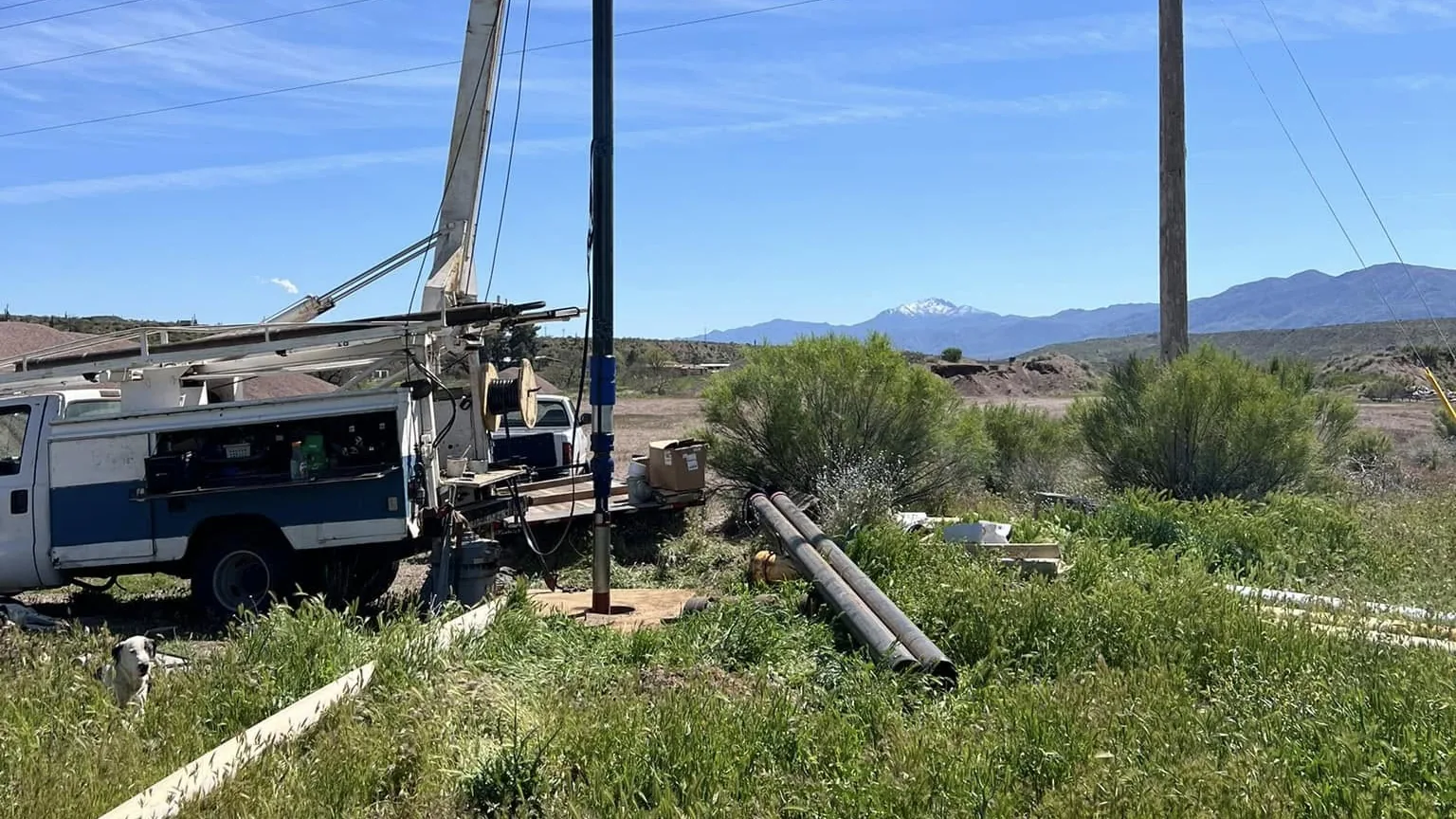
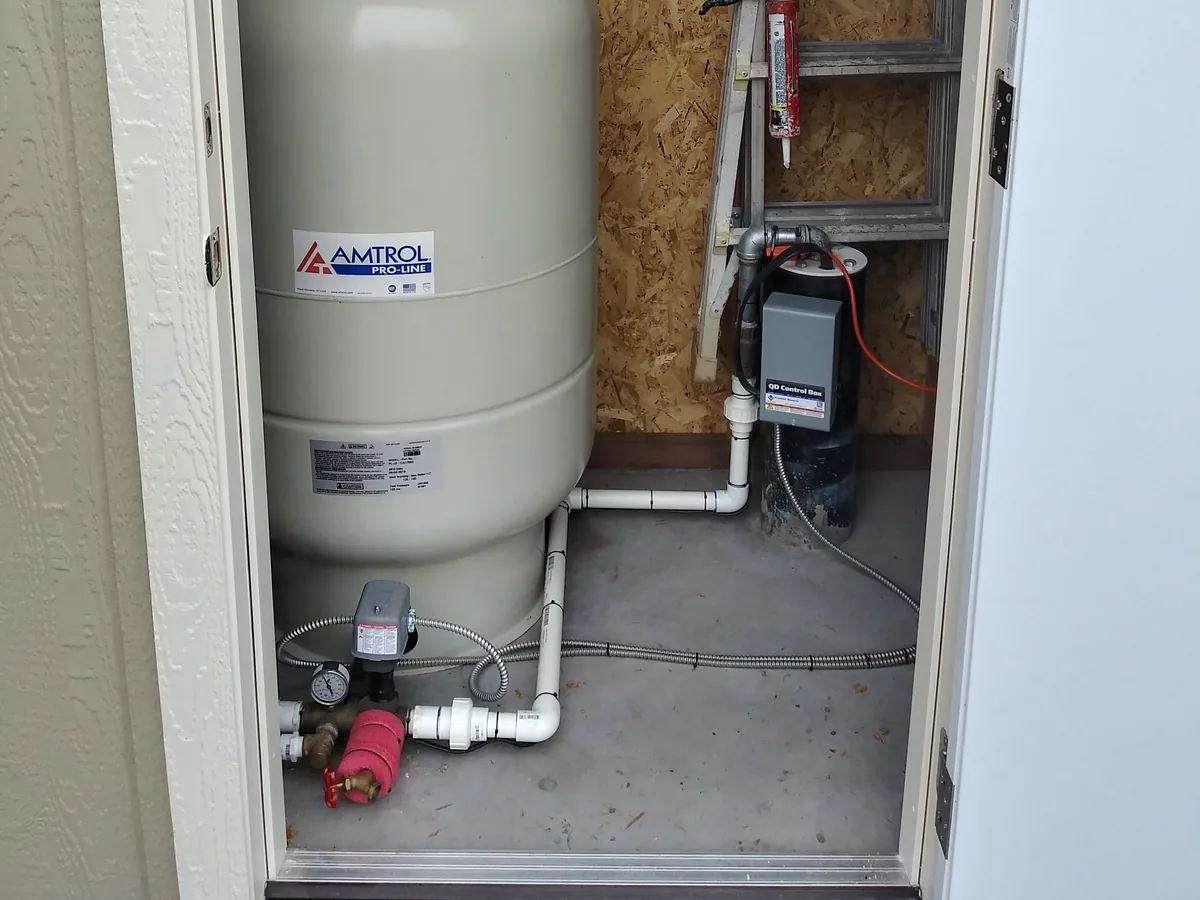
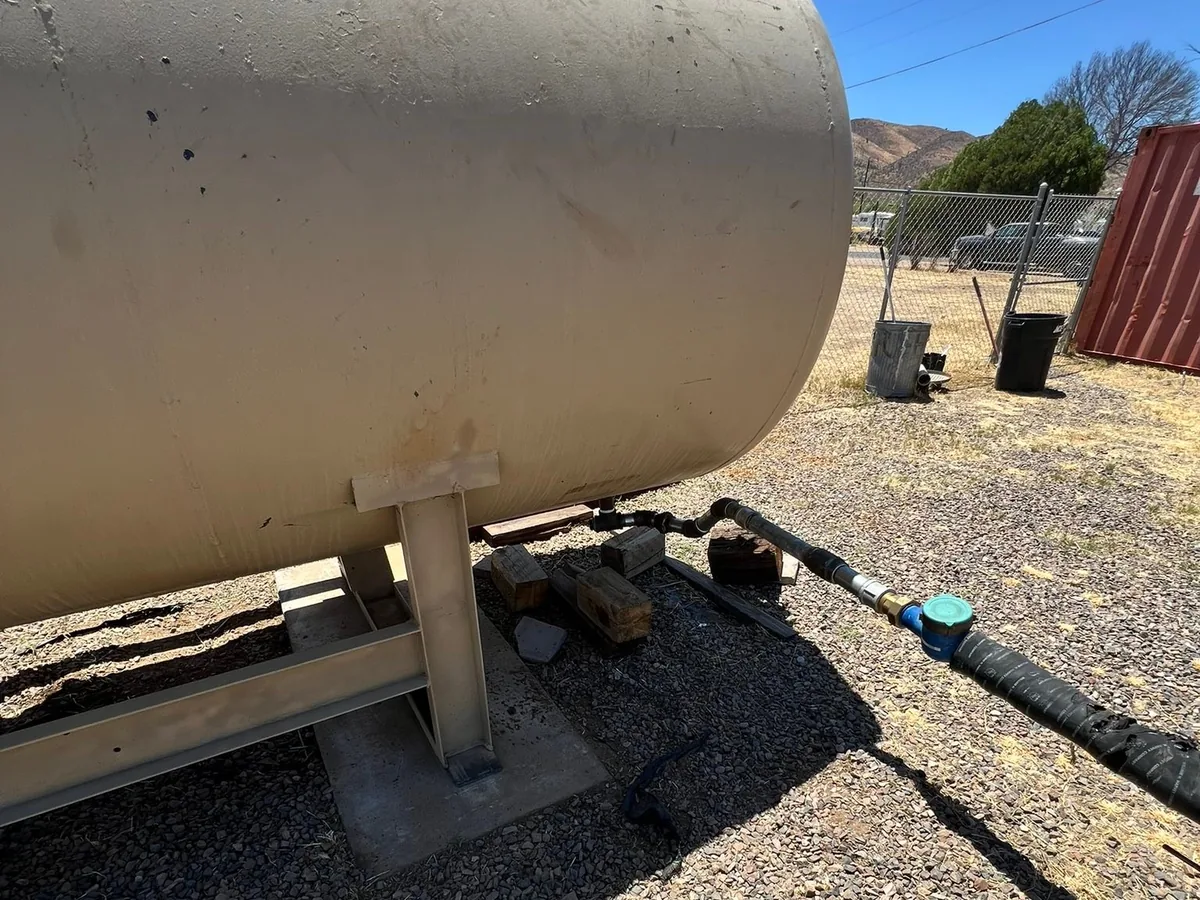
A shallow setting is a shorter pull than a 700 foot well, and it is easier on the motor. It also puts the pump close to the bottom of the hole, where sand collects. Before we pull anything, we test the electrical side: the pressure switch, the control box, the wiring and the motor's readings. Plenty of no-water calls turn out to be a switch or a wire.
What happens when a well fills with sediment?
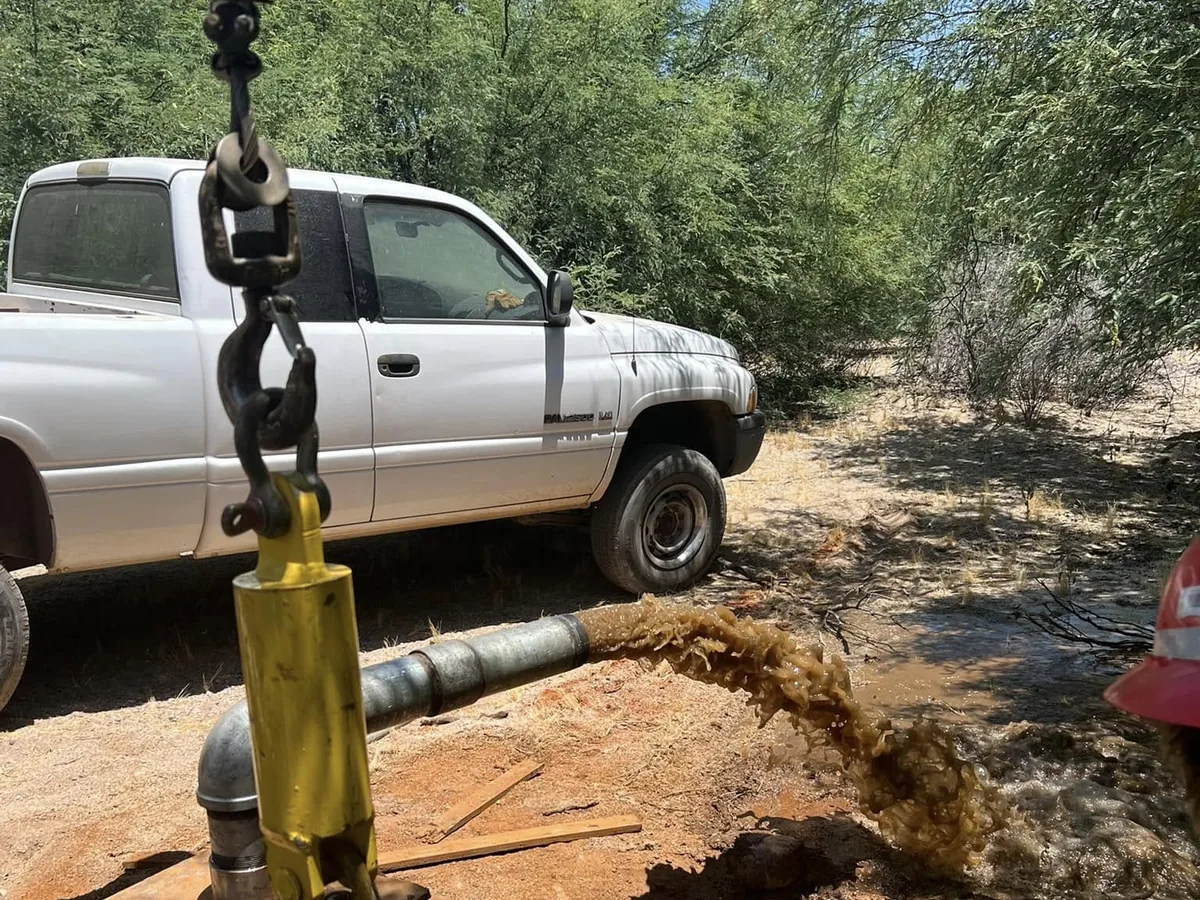
Shallow wells in creek country take in sand. Over the years the bottom of the hole fills with sediment, rust and scale. The water level can look fine while the well makes less than it used to. The pump starts pulling sand, or it runs dry and shuts itself off.
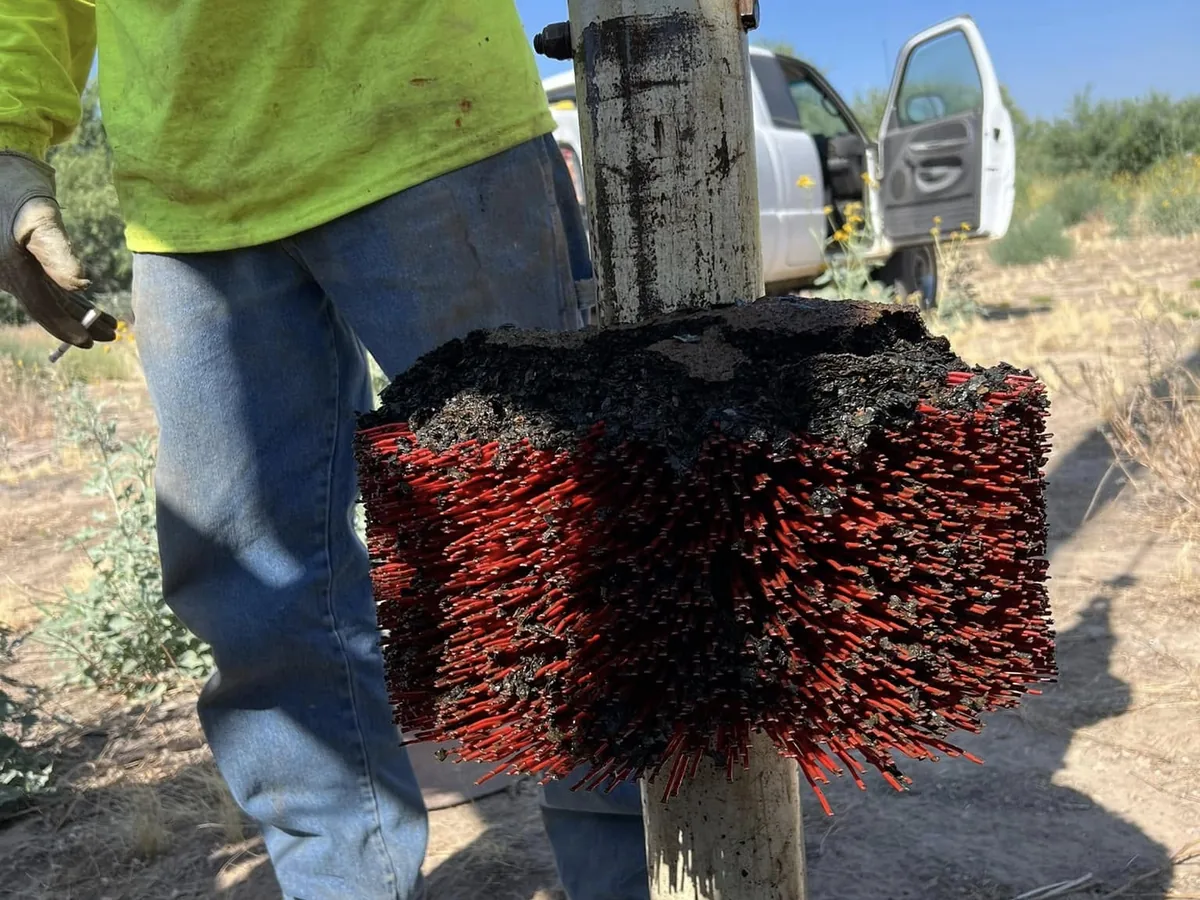
We pull the pump and bail the sediment out with the sand bailer on our rig. Then we brush the casing, treat the well and test pump it to see what it makes. A downhole camera goes in when we need to see what is down there. In many wells that puts several feet of hole back in service.
Cleaning works on a hole that has filled in. It does not fix a water table that has dropped, and we tell you when that is what we are looking at. Well cleaning and a new pump are two different answers to what can look like the same problem.
Ranch, stock and irrigation wells in the basin
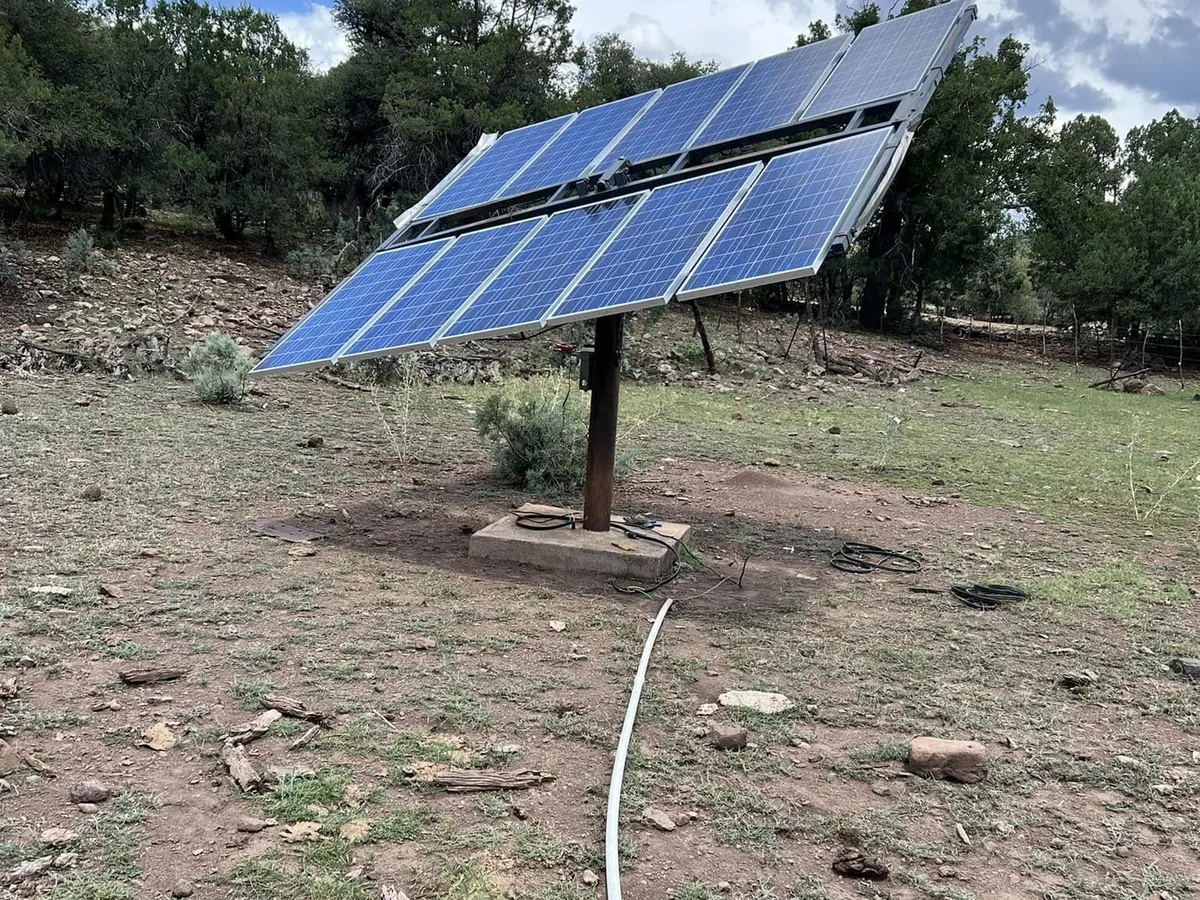
Tonto Basin is ranch and small-farm country. Stock wells, troughs and storage tanks often sit a long way from the nearest power pole. That is where solar well pumps fit: panels, a controller, a pump down the well and a float switch at the tank.
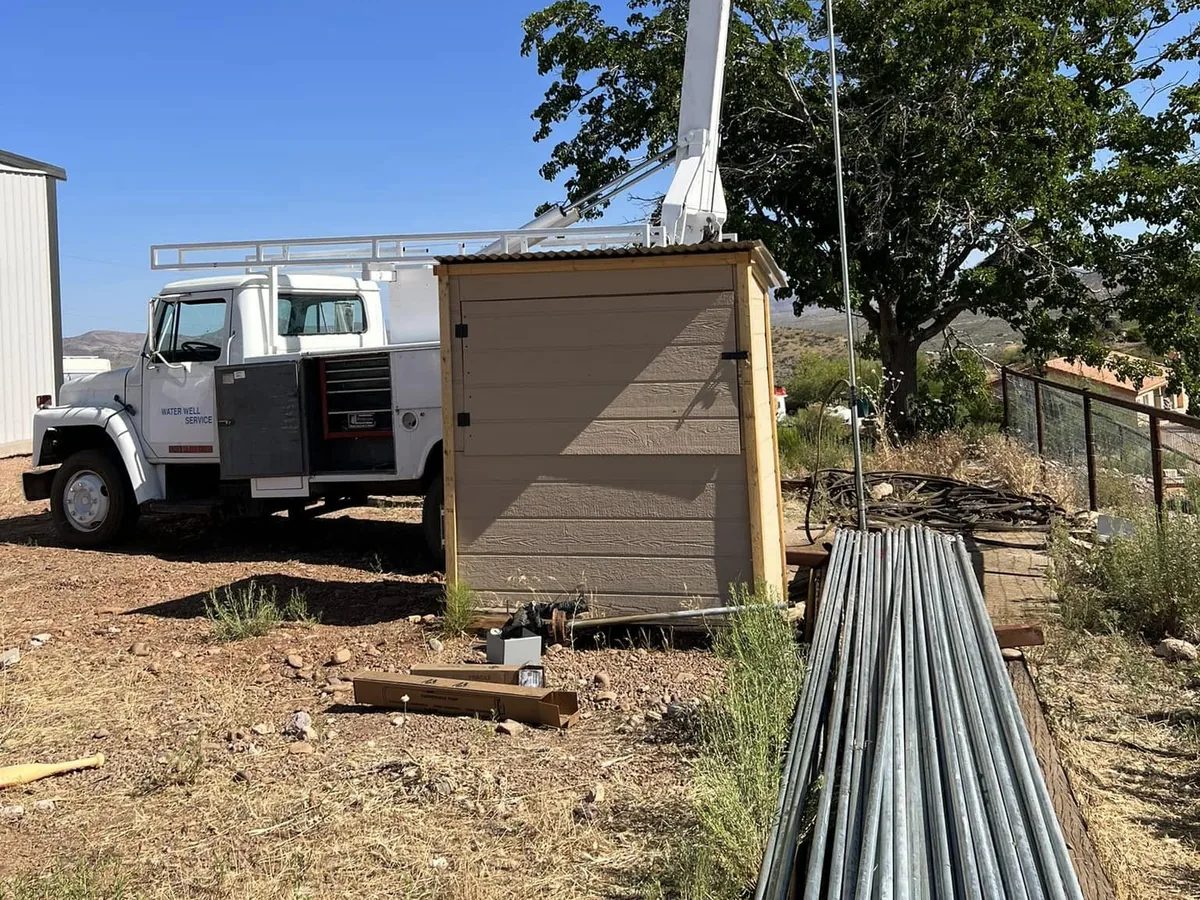
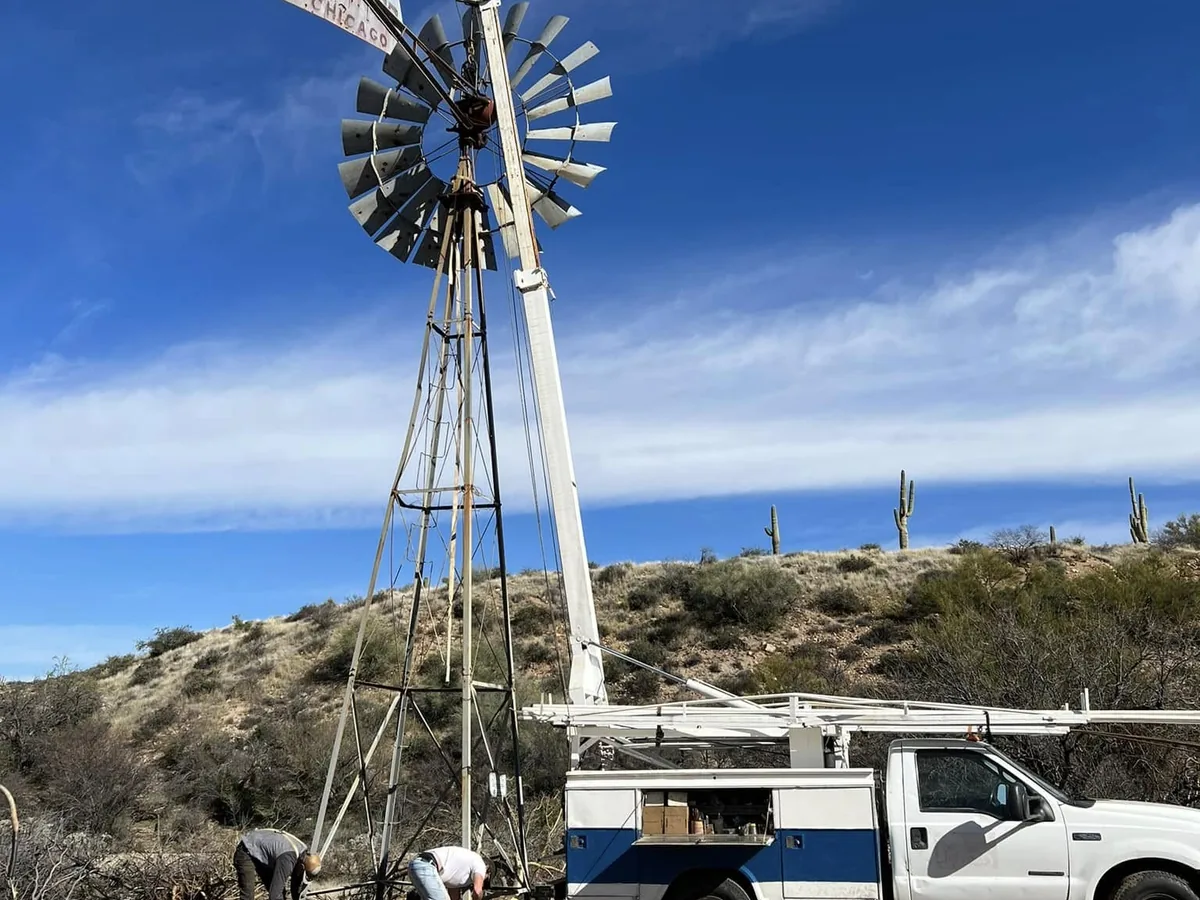
The panels run the pump while the sun is up, and the tank carries the herd overnight. A stuck float, a chewed wire or a controller hit by lightning stops the whole setup. If you still have a windmill on the place, windmill repair covers the gearbox oil, the leathers, the check valves and the rod. A home or a herd with no water moves to the front of the schedule.
The basin also has irrigation wells that make hundreds of gallons a minute. That is a different machine than a house pump. Arizona calls a well with a pump capacity of 35 gallons per minute or less an exempt well, and that covers most houses. We work on the household pumps and on the bigger stock and irrigation pumps.
Getting to a well when Tonto Creek is running
We drive up AZ-188 from Globe, about 49 miles. The basin runs along the creek from Jakes Corner down toward Roosevelt Lake, through Punkin Center at the mouth of Reno Creek. About half the people in Tonto Basin live on the east side of Tonto Creek.
The Tonto Creek bridge opened in 2024 and gave the east side a crossing that stays open in high water. The dirt crossings can still become impassable when the creek runs. When the water is up, we plan the trip around it.
Much of our work is out where there is no cell service. If you reach voicemail, leave a message, send a text or use the form, and we call you back. Monsoon storms put lightning into this basin every summer, and lightning is hard on pressure switches, control boxes and pump motors.
Communities and areas we serve around Tonto Basin: Punkin Center, Jakes Corner, Gisela, Greenback Valley, Tonto Creek, Reno Creek, Gun Creek, Hardt Creek, Old Highway 188.
Tonto Basin ZIP codes served: 85553.