Well pump repair in Mammoth and the San Pedro valley
We drive over from Globe for Mammoth work. The way in is about 57 miles down AZ-77 through Winkelman and Dudleyville. Most calls start the same way: the faucet is dry, the pressure has fallen off, or the pump kicks on and off every few seconds. Sometimes the breaker trips every time the pump tries to start.
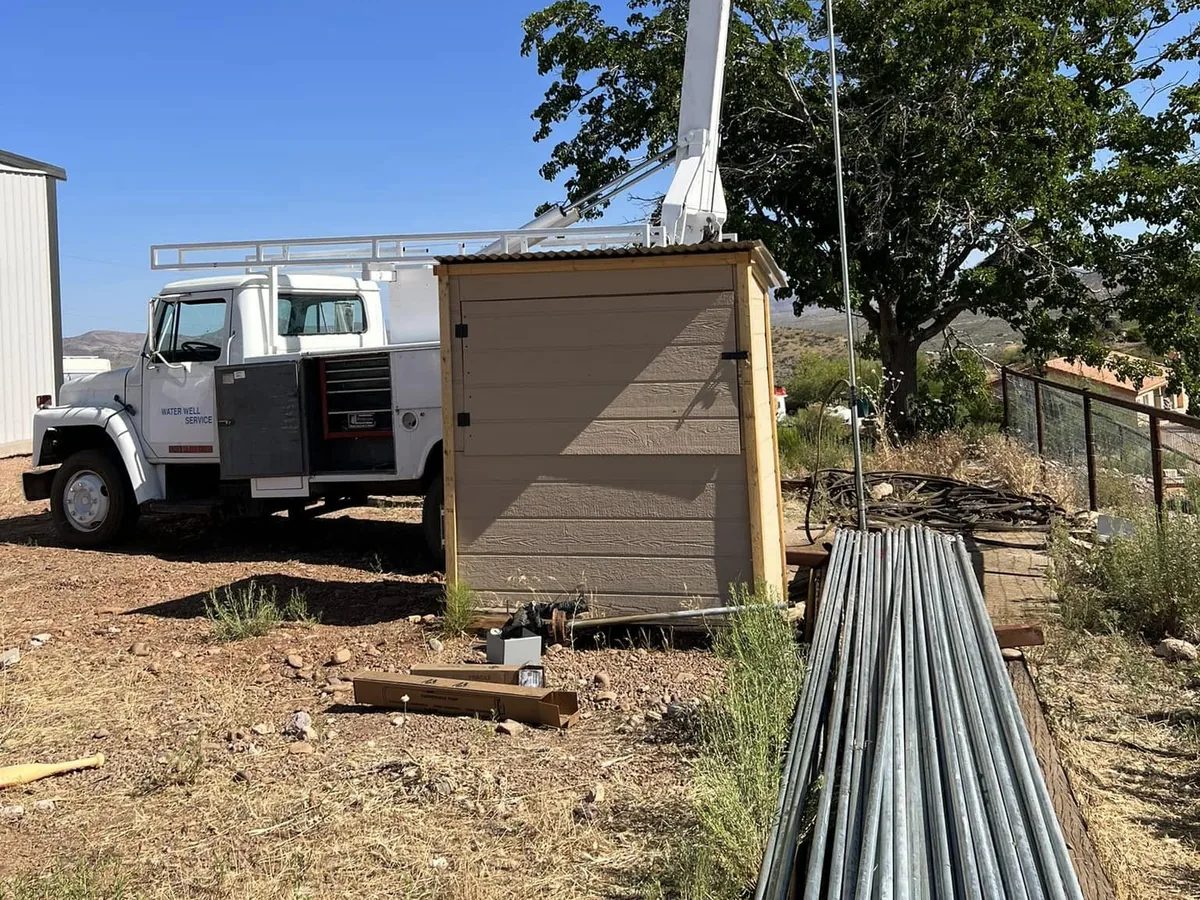
We test the electrical side before anything comes out of the hole. That means the pressure switch, the control box, the wiring and the motor's readings at the wellhead. A bad switch or a chewed wire costs a lot less to fix than a pump. When the readings say the pump is done, we bring the pump hoist rig down and pull it.
Pumps and pipe come apart down in the hole, and the broken half stays in the well. Fishing a dropped pump out is regular work for us, and we carry our own tools for it. New pump and pipe then go back in its place. With the pump out of the well, the drop pipe, wire, check valves and well seal get looked at too.
How deep are the wells around Mammoth?
It depends on where the well sits. USGS records for wells in the San Pedro valley around Mammoth run from shallow river-bottom wells to wells several hundred feet deep. Close to half of the recorded wells are under 100 feet. Back away from the river and the depths climb.
There is a reason for that split. A narrow band of coarse river gravel runs along the San Pedro. Published basin studies put it at roughly 80 to 250 feet thick. It is the most permeable material in the valley, so a river-bottom well can be shallow and still produce. Away from that band you are into older basin fill, which parts with water more slowly and often means a deeper well.
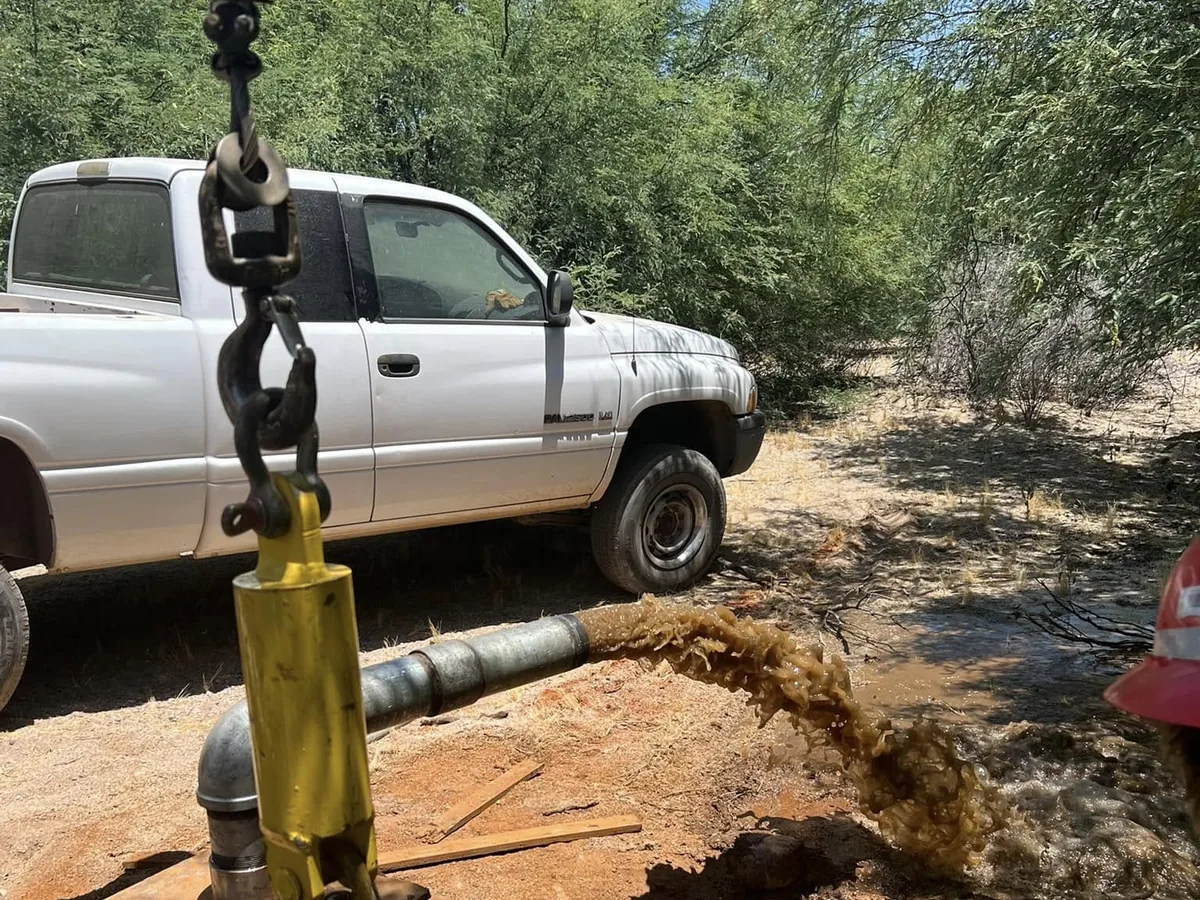
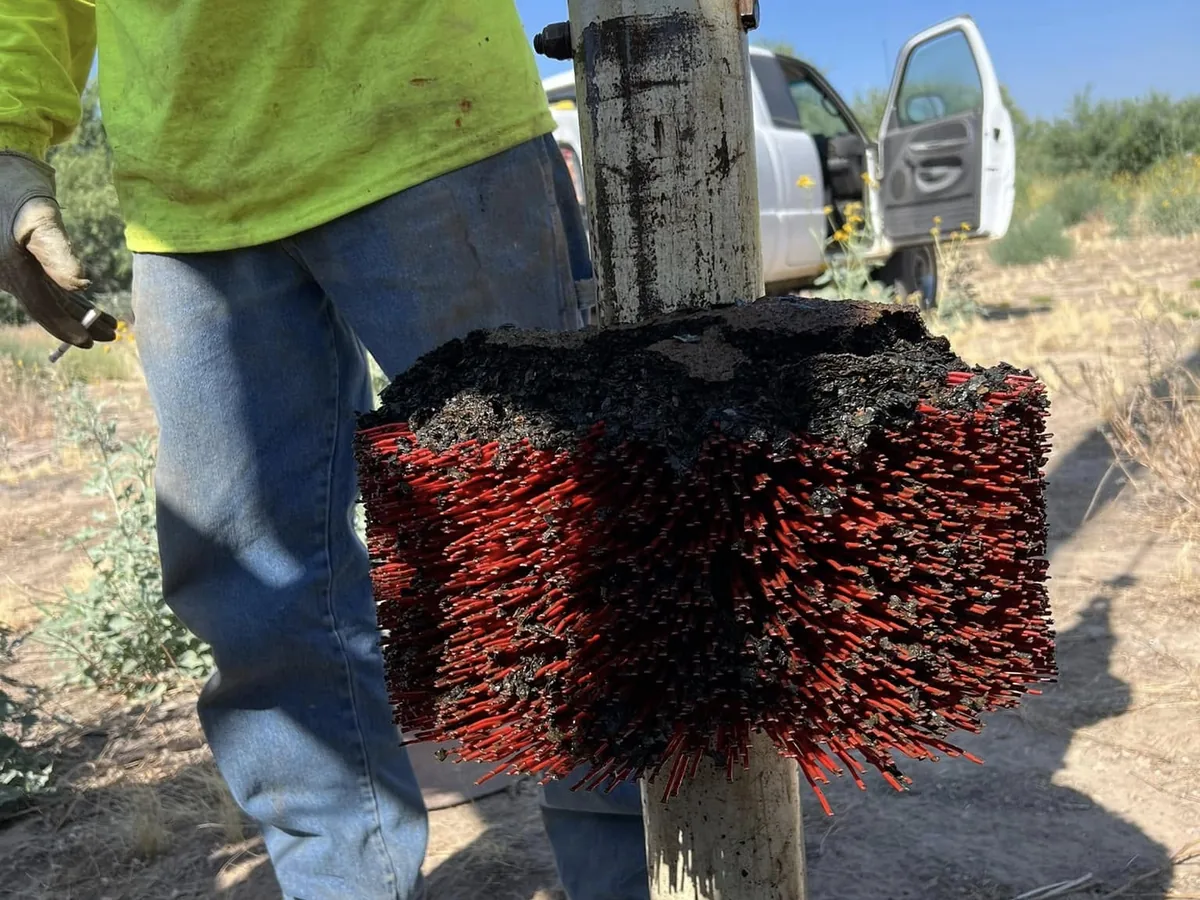
What that means for your pump is setting depth and sand. A shallow well in river gravel can pull sand when the water level drops or the pump sits too low. Sand chews up pump stages and check valves, and it settles in the bottom of a well over the years. When a well has filled in, cleaning it out is a separate job from the pump. We tell you which one you are looking at.
Town water, private wells and the ADWR well registry
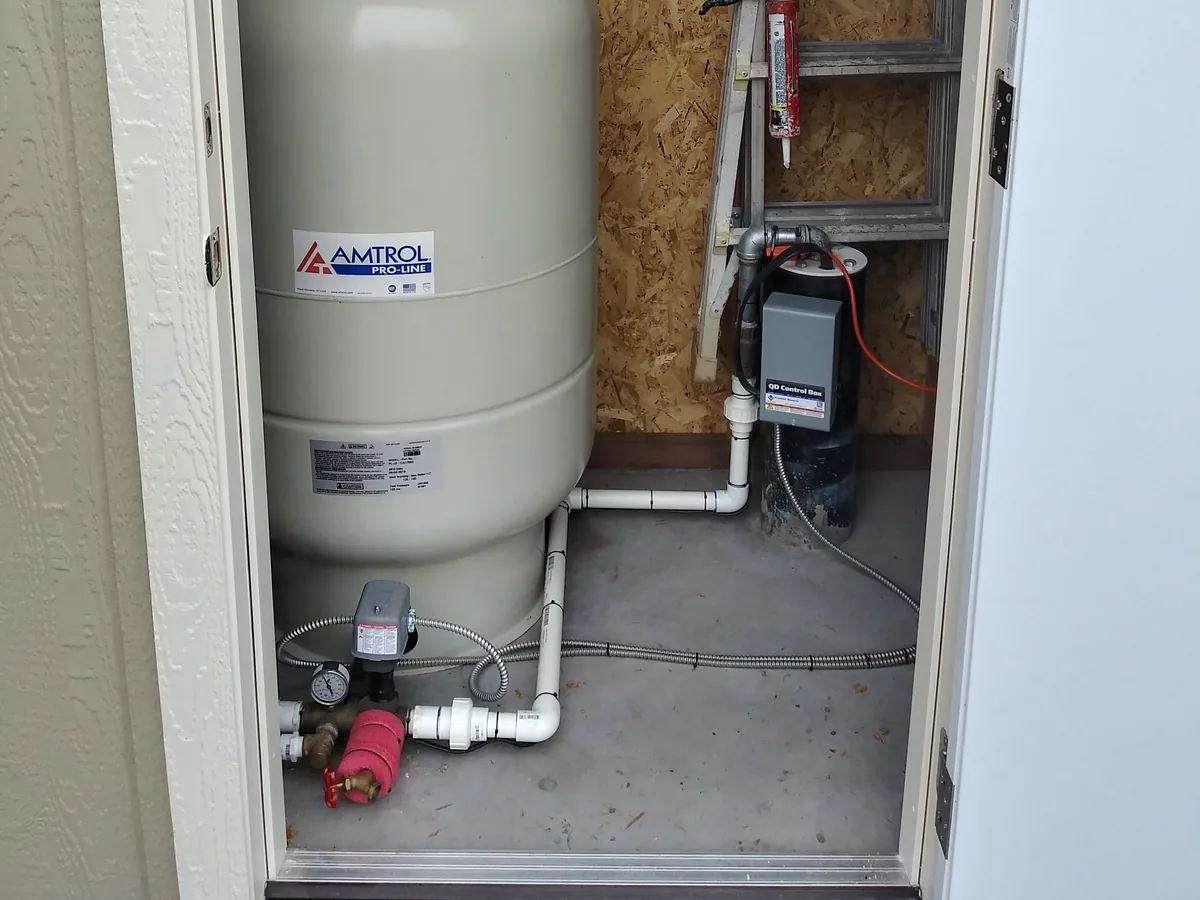
Inside the town limits, Mammoth's utility supplies the water and a household there is on a meter. Everyone else owns the whole system: the well, the pump, the drop pipe, the pressure tank and whatever sits between the wellhead and the house. When a part of that quits, there is no utility to call.
Arizona registers wells through the Department of Water Resources. Every registered well carries a number that starts with 55 and six digits after it. The file behind that number can hold the driller's log, with the total depth, the casing and how the well was built. Having that number handy when you call saves a lot of guessing about depth.
A domestic or exempt well in Arizona is one equipped to pump 35 gallons a minute or less. That covers a house or up to 25 homes. State law also asks the registered well owner to file a pump installation report. It is due within 30 days of new pumping equipment going in. Our side of it is the pump and everything attached to it. A new well or a deeper one is a job for a licensed well driller.
Ranch wells, windmills and solar water in the Galiuro foothills
Stock water out here comes from a well and sits in a tank until the cattle drink it. A windmill, a solar pump or an electric pump fills the tank, and a float keeps it from running over. People call and say the stock tank is empty and the cattle are standing around it. The trouble is usually the pump, the float or the pipeline between them.
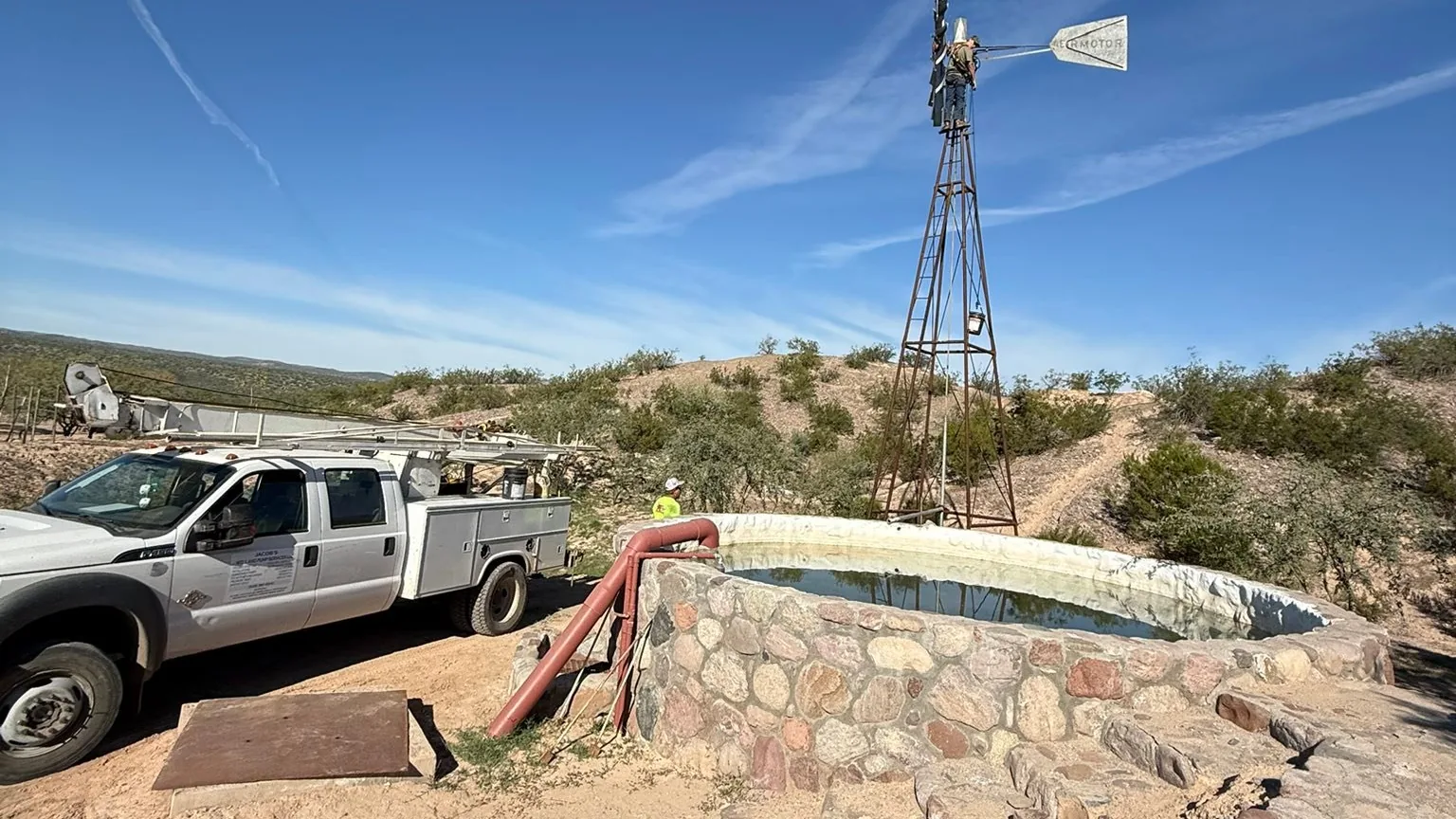
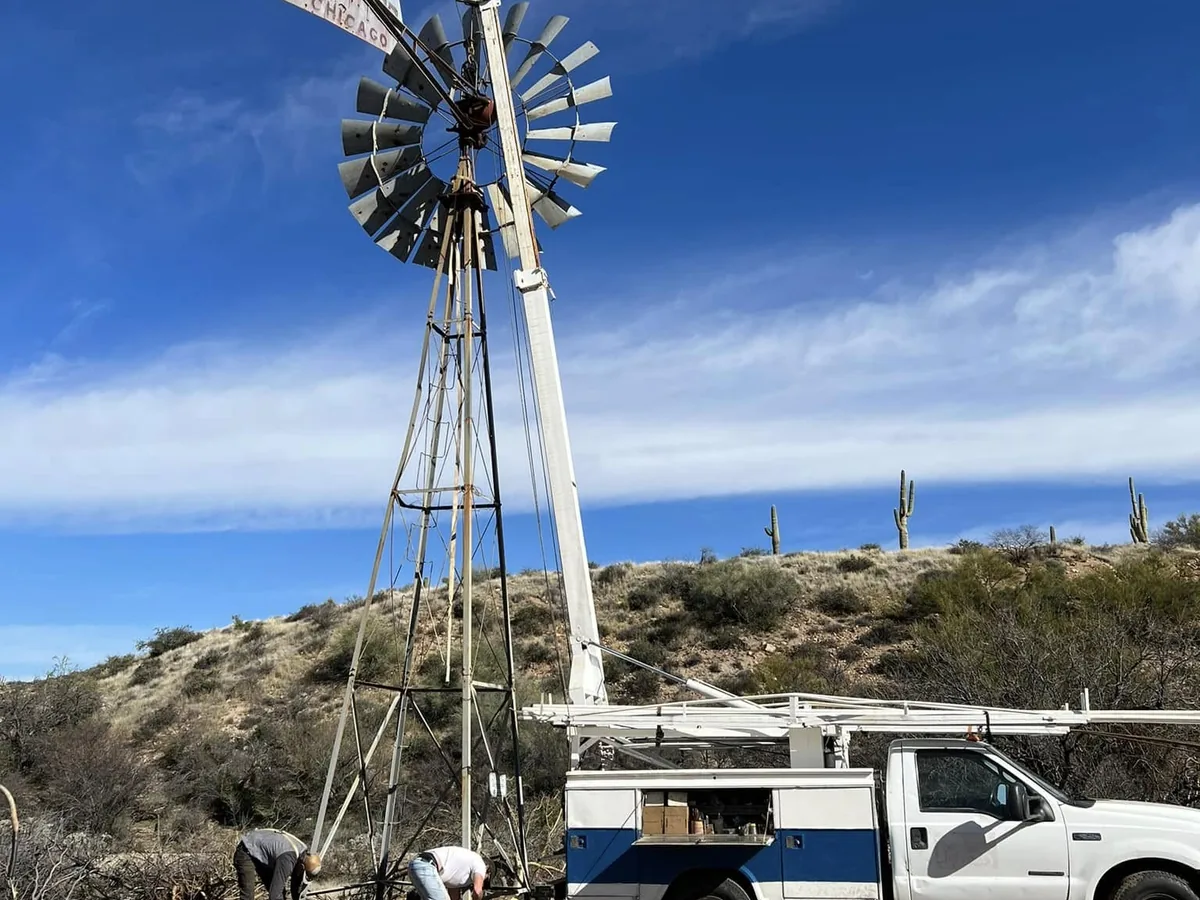
Windmills still pump water on ranches around here. A mill needs its gearbox oil changed once a year. We have serviced a ranch windmill near Mammoth with that yearly oil change. Worn leathers, a broken sucker rod and a stuck cylinder are the failures we see after that. We pull rod and pipe with the rig, fish dropped rod out of the hole, and do the tower work in a harness. Windmill repair is one answer, and putting a solar pump on the same well is the other.
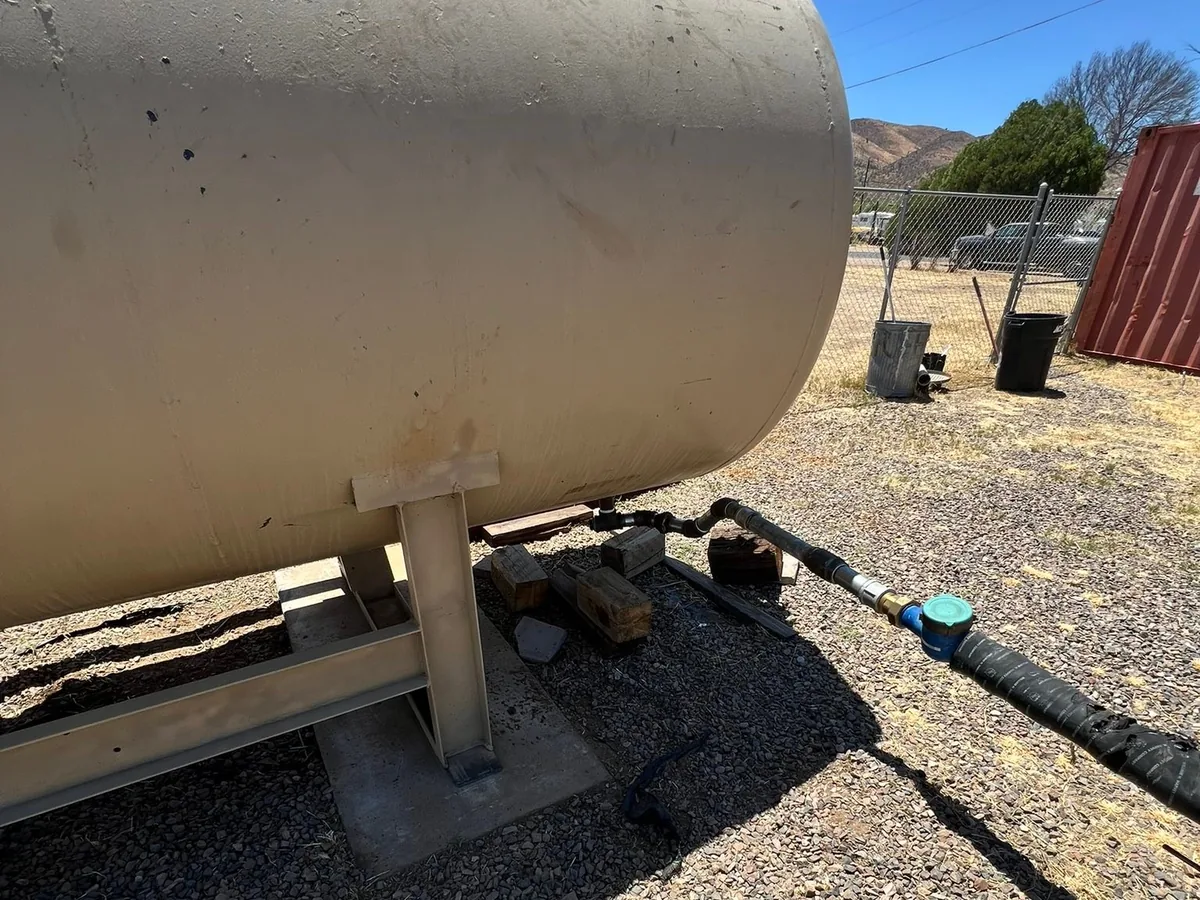
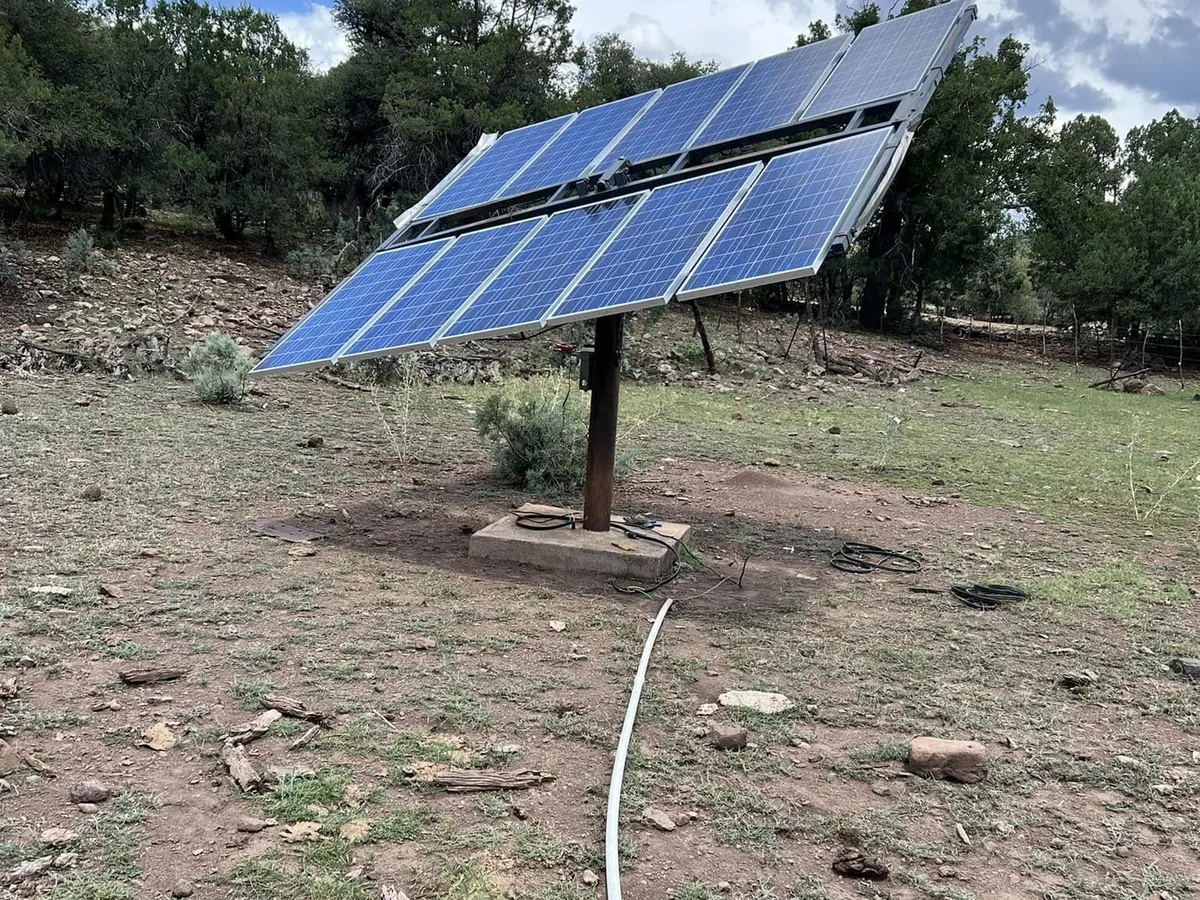
Solar suits this country. The sun is steady, the wells are spread out, and running power to a far stock well is its own project. A solar setup pumps into a tank while the sun is up, and the tank carries the herd through the night. We also patch and rebuild steel tanks and run black pipeline out to troughs. Storage tank repairs often ride along with the pump work.
Summer weather is part of the job out here. Monsoon lightning is hard on controllers, pressure switches and pump motors. The washes can run hard enough to cut a road to a well, and a job sometimes waits for the water to drop.
Communities and areas we serve around Mammoth: North Mammoth, Dudleyville, Feldman, San Pedro River valley, Aravaipa Valley, Aravaipa Canyon, Copper Creek, Sombrero Butte, Galiuro Mountains foothills.
Mammoth ZIP codes served: 85618.