What is the groundwater like around San Carlos?
A 1989 USGS study of the reservation describes three kinds of water-bearing ground here. Along the San Carlos and Gila rivers, the stream alluvium reaches about 100 feet thick at most. Under the valleys, the basin fill runs far deeper, with a maximum of more than 3,200 feet in places. Older hard rock covers roughly a quarter of the reservation and holds little water.
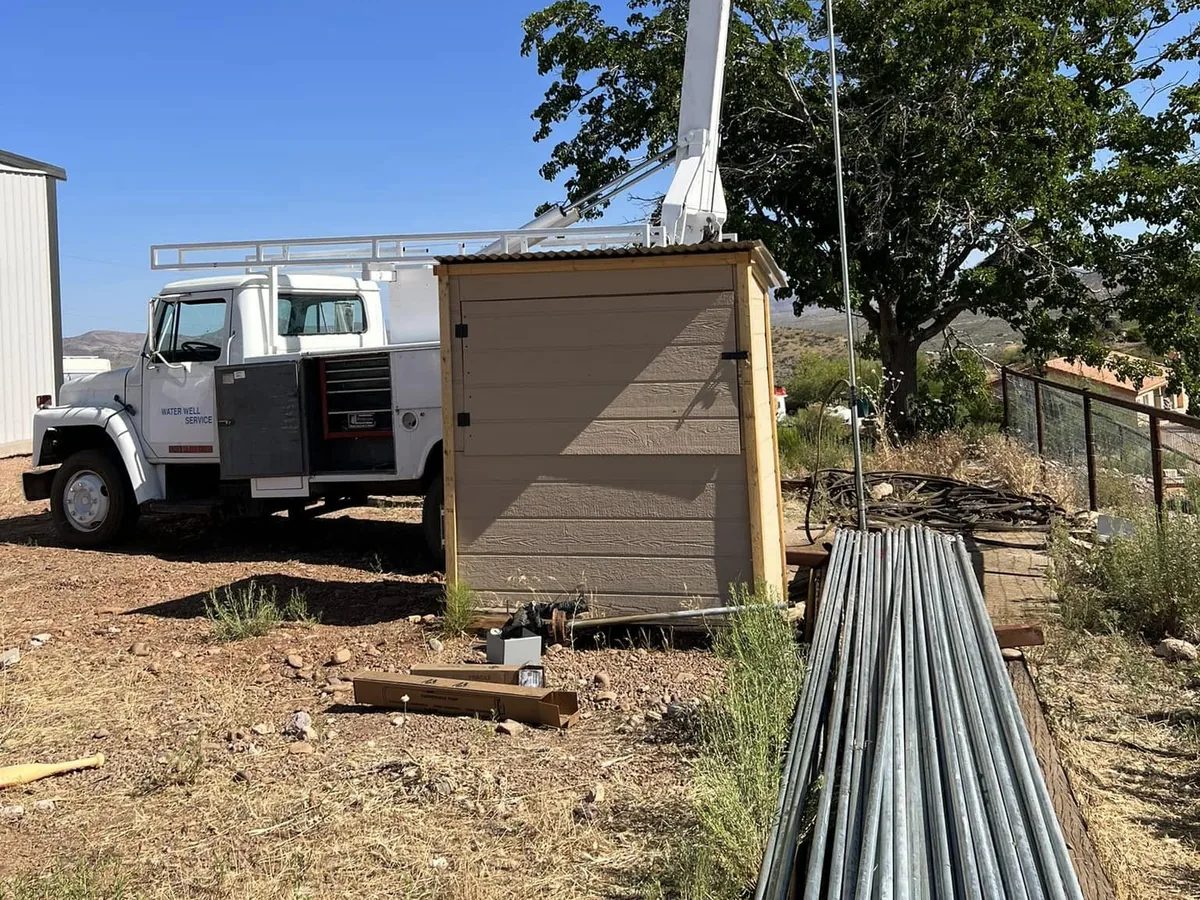
That spread is why two wells a few miles apart can be nothing alike. A shallow well in the river bottom and a deep well out in the hills need different pumps. Depth sets the pump, the drop pipe and the wire, and it sets how the pump gets pulled.
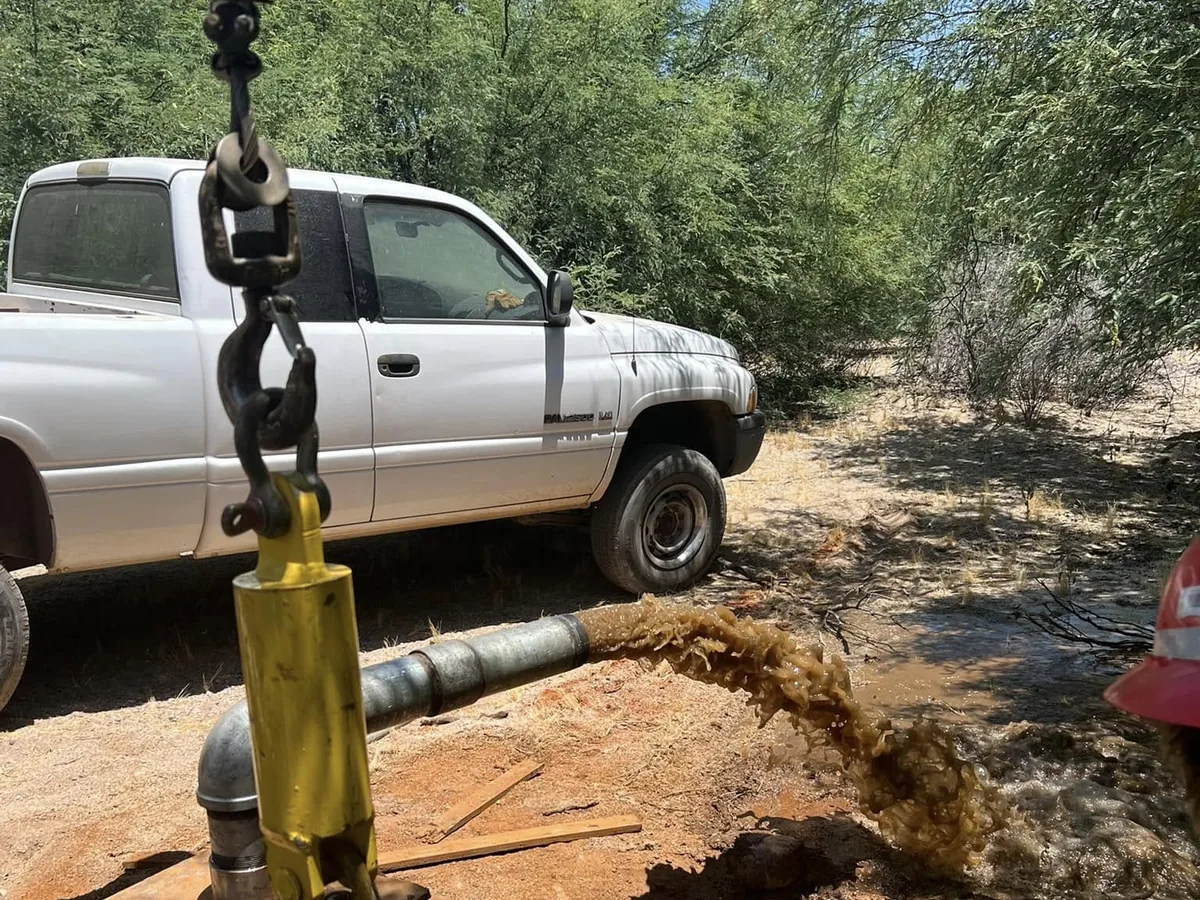
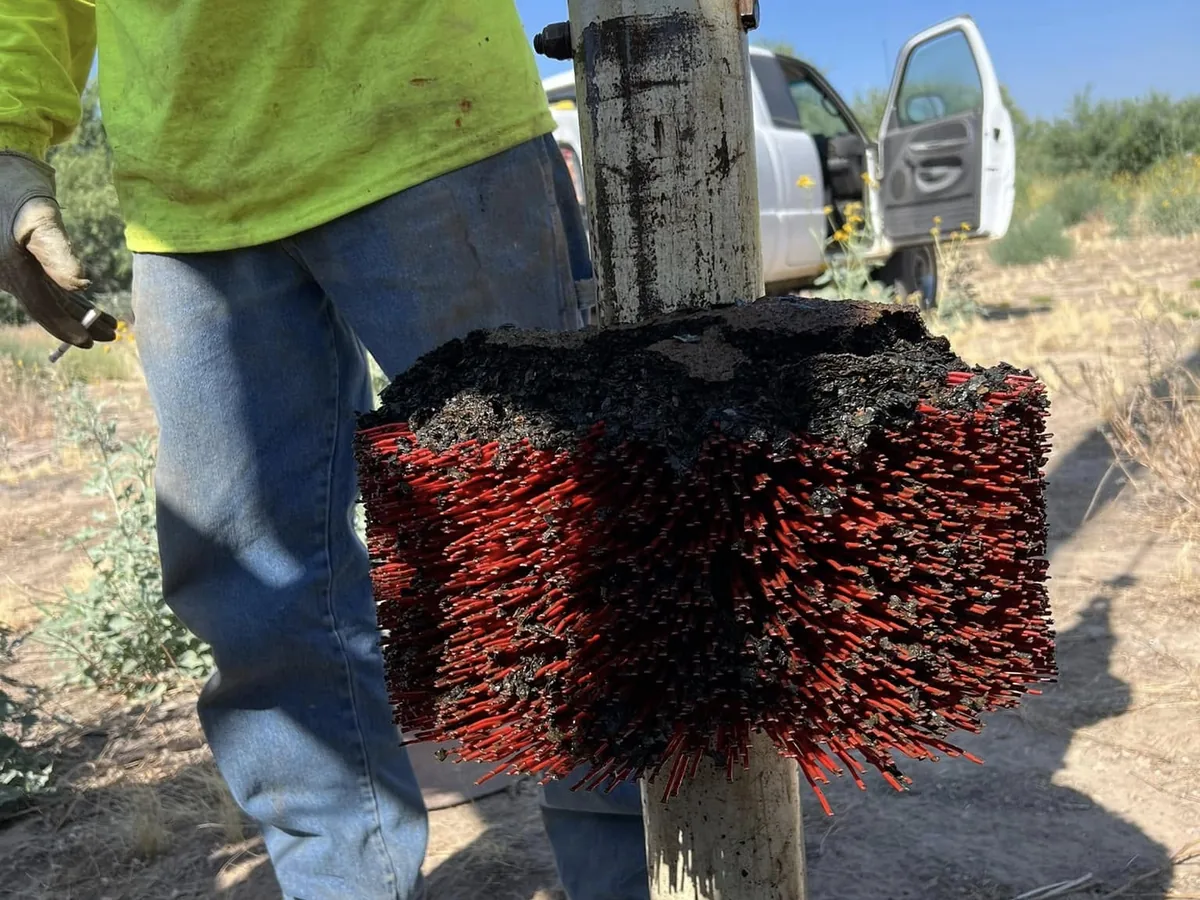
The same study found the alluvium along the Gila River carries large amounts of dissolved solids. Water like that tends to leave scale in pipe, fittings and check valves. We look at all of it when a pump comes out of the hole.
Ranch and stock wells in the high country east of San Carlos
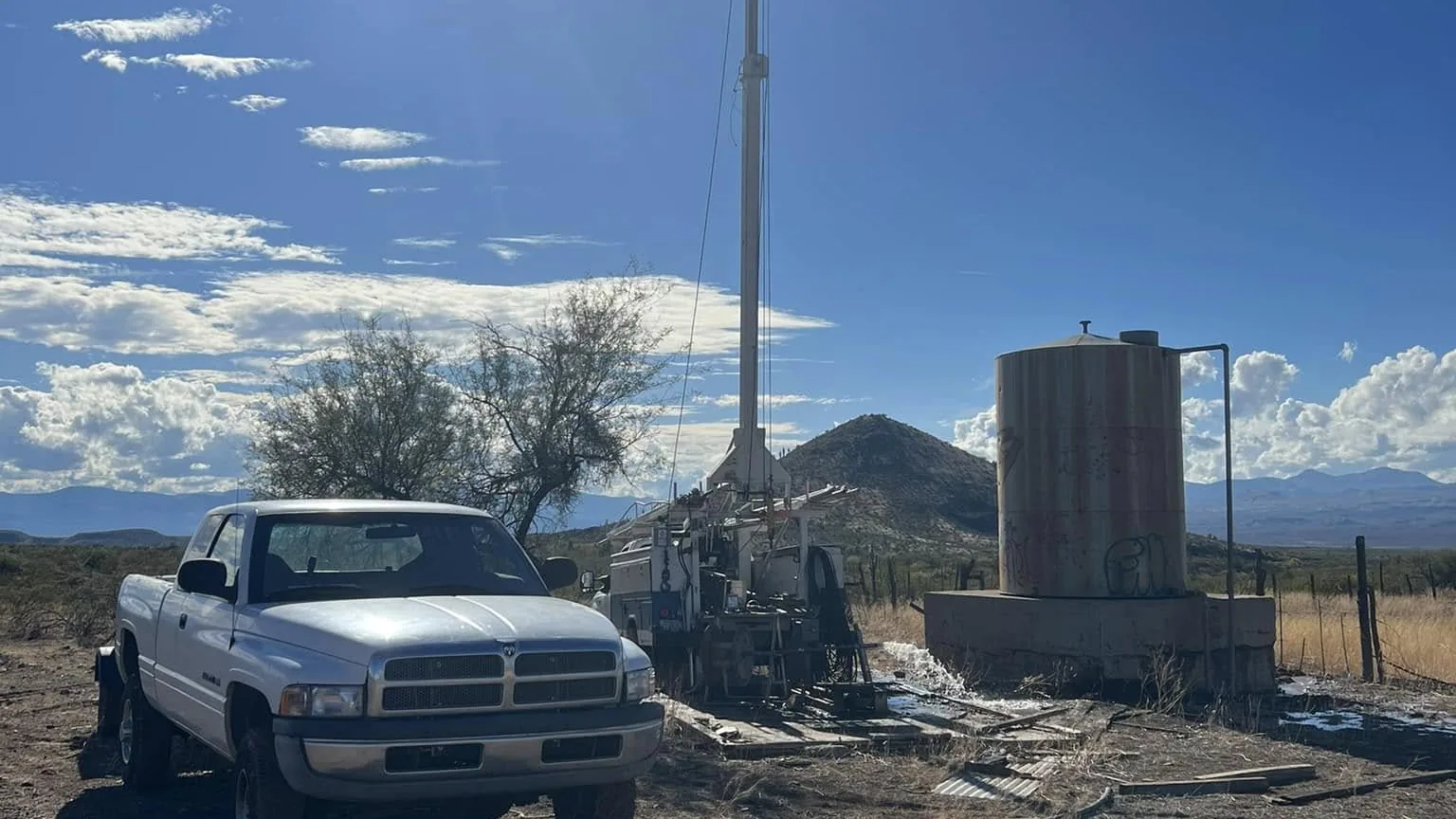
The country around San Carlos climbs fast. The town sits at about 2,628 feet near the river. The high country out east on the reservation climbs past 5,900 feet. Stock wells up in that high country run deep, and they are a long way from a power line.
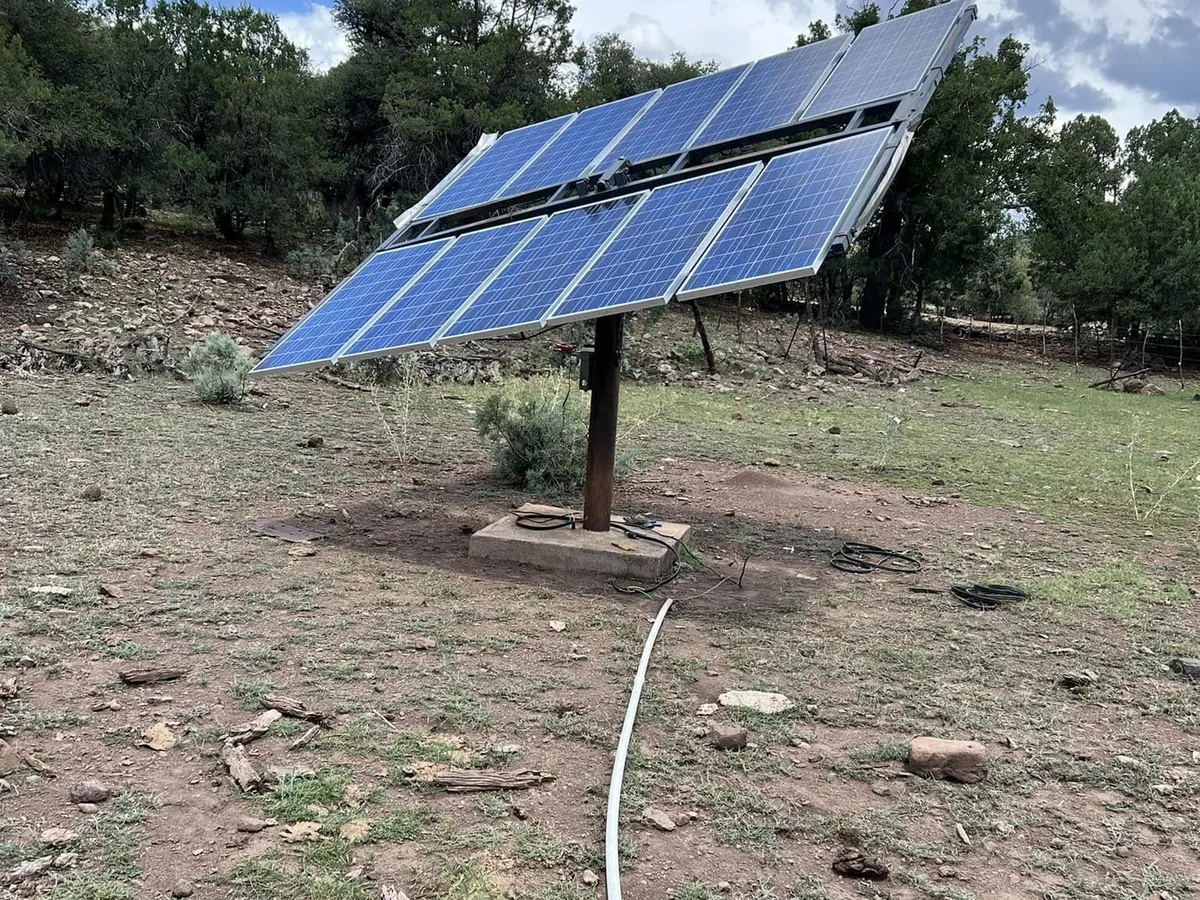
That is why so much of the ranch water out here runs on sun. A solar setup is panels, a controller, a DC submersible pump and a float switch at the tank. We have set solar well pump systems more than 700 feet deep in this country. The pump fills the tank while the sun is up, and the tank carries the cattle through the night.
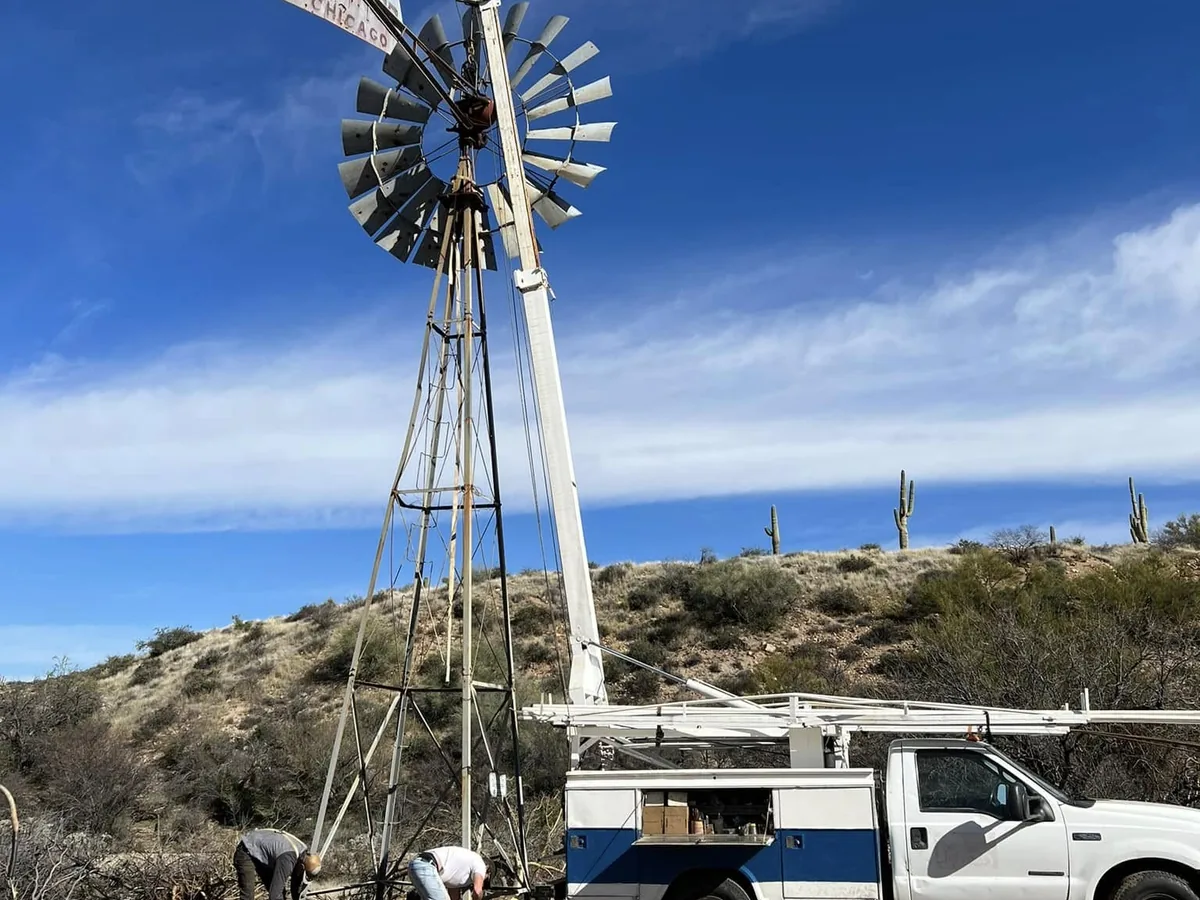
Windmills are still working wells out here. Our windmill repair work starts with the yearly gearbox oil change and new leathers in the cylinder. We pull and replace sucker rod and drop pipe, and we fish dropped rod out of the hole. A windmill well can also be converted to solar when that is the better answer.
Storage tanks, pipelines and irrigation pumps along the river bottoms
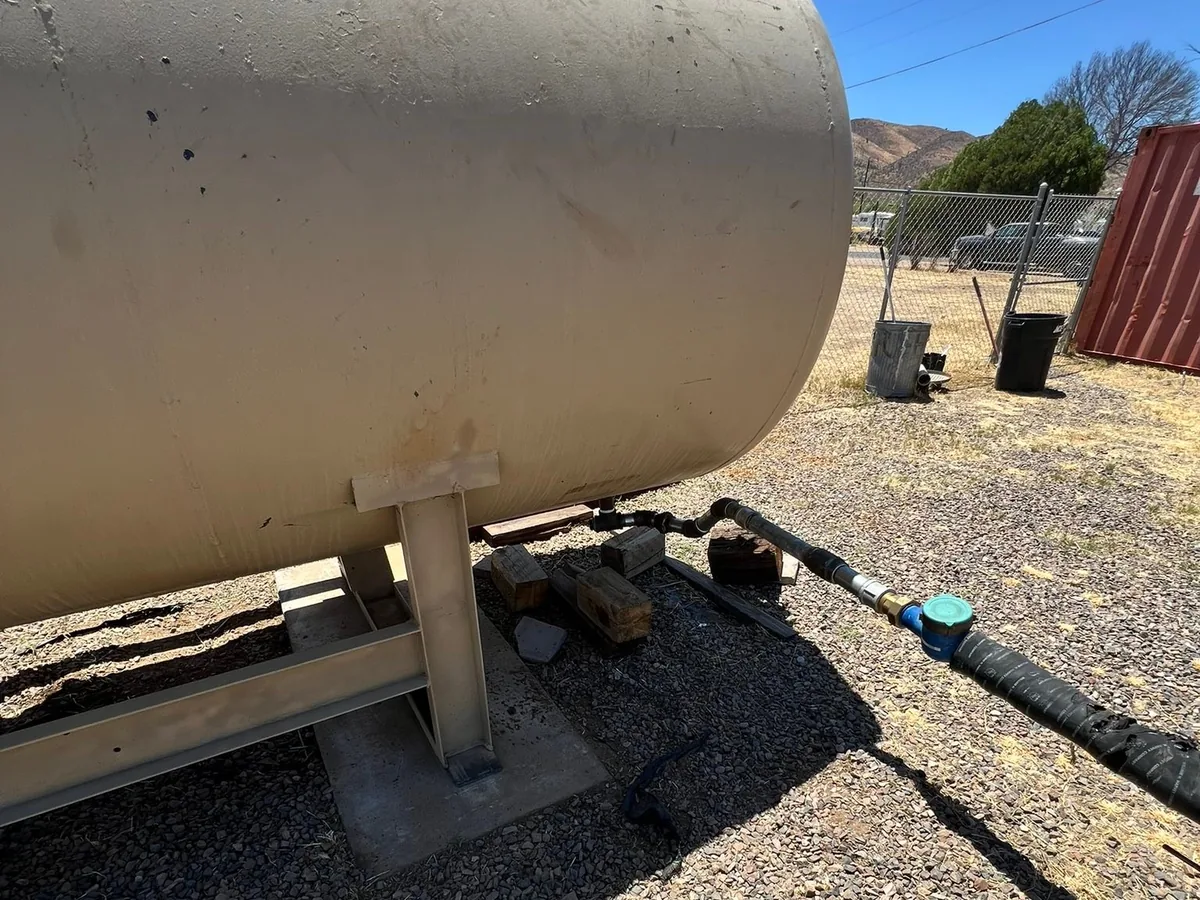
Water out here usually has to be stored before it is any use. A stock well fills a holding tank, and the tank feeds troughs through buried pipeline. We install and repair storage and holding tanks, float valves, float switches, overflows and the pipe runs between them. We have laid black HDPE pipeline thousands of feet long to get water from a well to a tank.
Steel tanks take a beating in this sun, and they rust from the inside and the bottom. We patch and rebuild leaking steel tanks, re-plumb them and get them back on a sound stand. Wildfire is the other problem out here. We have replaced pipelines that burned in a wildfire so cattle had water again.
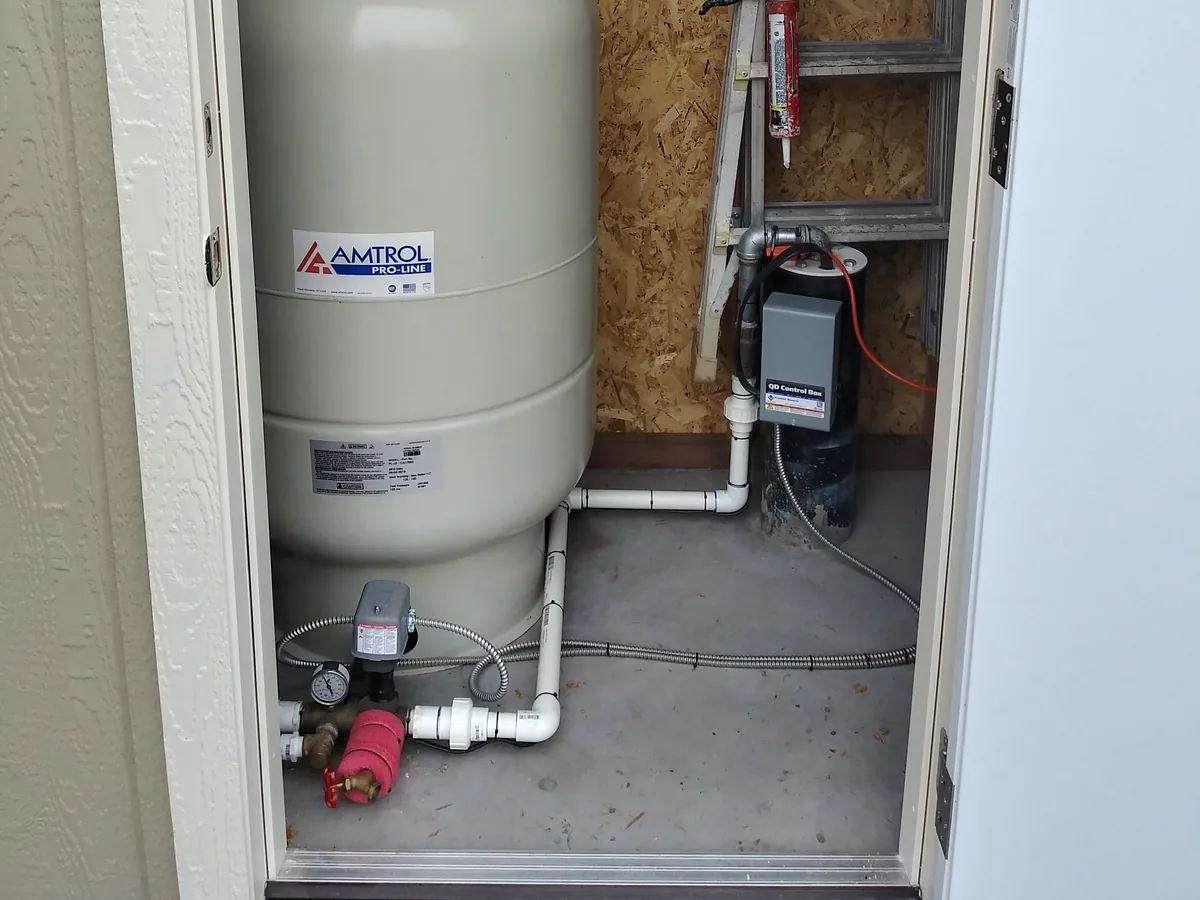
Down on the river bottoms the work turns to farm irrigation. Those pumps move far more water than a house pump does, and they are sized to the field. We work irrigation and stock pumps as well as household pumps.
Well rules, well records and the drive over from Globe
Arizona's well rules and the state well registry cover wells on land under state jurisdiction. San Carlos is on reservation land, which is generally under tribal and federal jurisdiction instead. Your well may not show up in state records at all. If you are not sure what applies where you are, ask the office that handles land and water there.
What helps us most is what you already know. Tell us how deep the well is, how old the pump is, and what it did before it quit. If you have a driller's log or any paperwork on the well, have it out when we get there. If you have nothing, we start the same way, by testing the electrical side before anything gets pulled.
We drive over from Globe on US-70, about 20 miles east, and we keep going past the pavement. Ranch roads and long dirt two-tracks are part of the work out here.
Communities and areas we serve around San Carlos: Peridot, Cutter, Bylas, Calva, Seven Mile Wash, Gilson Wash, the San Carlos River valley, the Gila River bottom, the high country east of San Carlos.
San Carlos ZIP codes served: 85550.